
10 July 2025 · 3 min read
Small batch and prototype CNC parts: how we handle orders from one piece upward
Not every order starts at volume. We explain how SYG Industrial handles prototype and small batch requests, and what buyers should know before sending their first drawing.
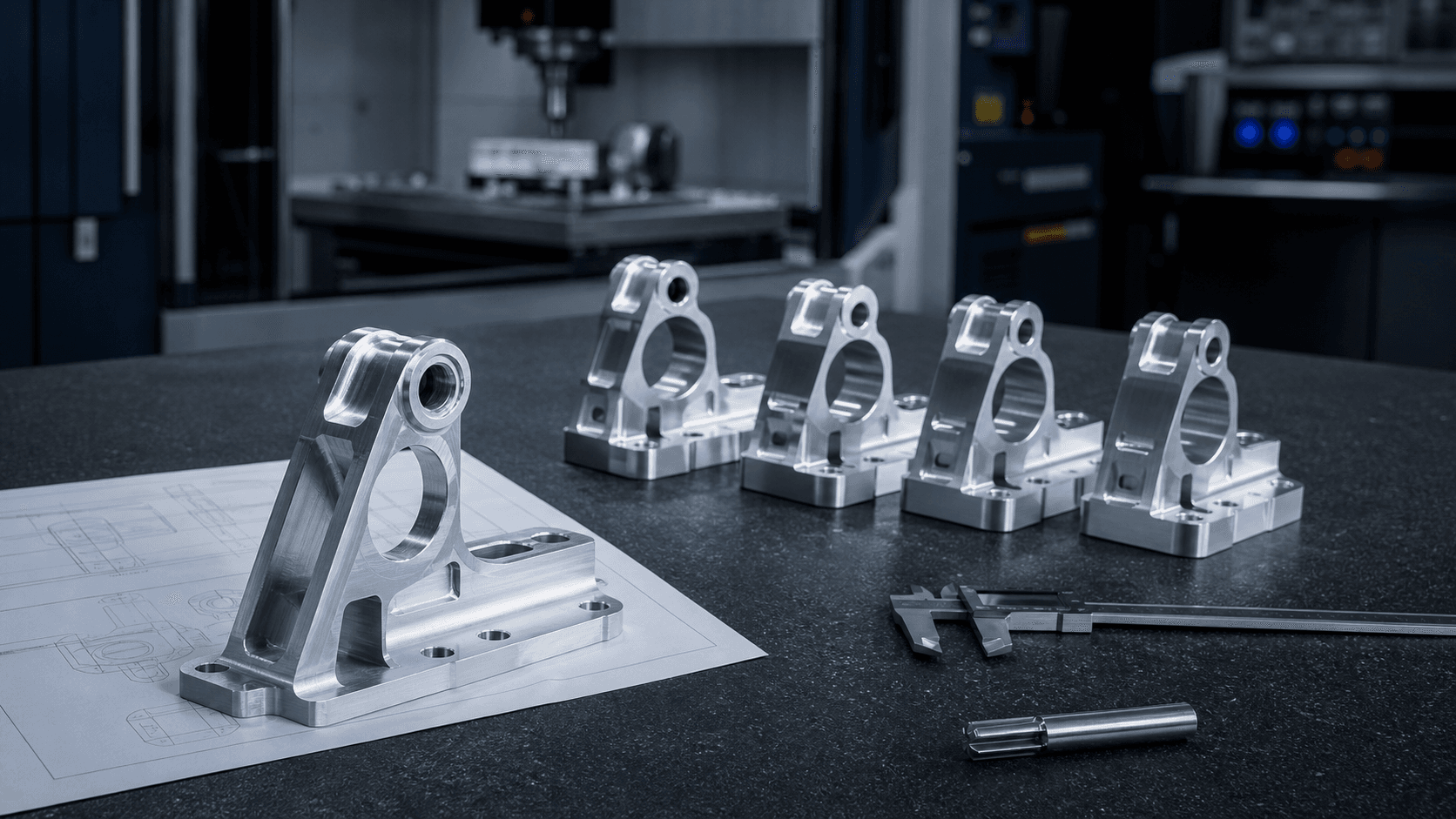
The minimum order question
The first thing many buyers ask is whether we have a minimum order quantity. The honest answer is: it depends on the part, not on a fixed number. A simple turned aluminium component can be made in single units without much overhead. A complex multi-feature steel housing with tight tolerances requires more setup time, which affects the economics of a single piece.
What we try to avoid is the situation where a buyer sends a drawing, gets quoted a price for a single unit that makes no commercial sense for either side, and then the conversation goes nowhere. Instead, we ask about the broader context — is this a one-time prototype, or the first piece of a planned series? That context shapes the conversation.
What to send for a prototype request
Getting a clear prototype quote does not require a perfectly prepared drawing package. It does require a few things:
- A drawing in a recognised format (STEP, DXF, PDF)
- The material you need, or a note that you are open to guidance
- The quantity for this request and the likely follow-on quantity
- Any critical dimensions or tolerances that are non-negotiable
- A target timeline, even if approximate
The more of this you can provide upfront, the faster we can give you a useful answer rather than a quote with a long list of assumptions.
Prototypes vs pilot series vs production
We think about orders in three stages. Prototypes are typically one to five pieces, used to verify fit, function, or appearance before committing to a production run. Pilot series usually run from ten to fifty pieces, used to test the supply chain, check consistency across units, and build stock before a product launch or equipment build. Production runs are fifty pieces and above, where the economics of setup cost versus unit price start to work clearly in the buyer's favour.
Most buyers who come to us for a prototype already have a pilot series in mind. Knowing that lets us set up the relationship — documentation, supplier qualification, tooling notes — in a way that makes the pilot series faster and cheaper than starting fresh.
What changes between the first and the fifth order
The first order with any new supplier involves more back-and-forth than it should. Drawings get clarified, tolerances get confirmed, and expectations get aligned. By the second or third order, most of that friction is gone. By the fifth, the communication is mostly about schedule and logistics.
We try to compress that learning curve as much as possible by being thorough at the start. A well-documented first order is an investment in all the orders that follow.